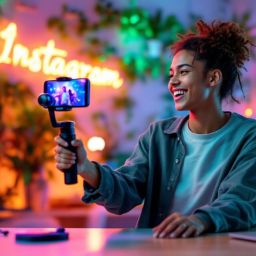
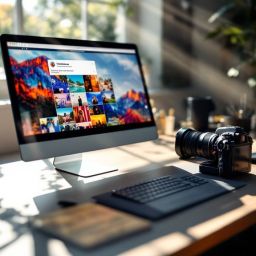
Like the “tingles” people mention in late-night TikTok comments, ASMR means a calming scalp-and-spine sensation triggered by whispers, tapping, and close-up visuals. If you want better reach, you need to hook fast: put one clear trigger in the first 1–2 seconds, keep clips 15–60 seconds, and make them loop cleanly to lift completions and replays. Post consistently during 7–10pm, then watch saves and shares—because that’s where the algorithm starts to…
Key Takeaways
- ASMR means “Autonomous Sensory Meridian Response,” a pleasant tingling sensation some people get from specific calming audio-visual triggers.
- Use proven triggers early: whispering, soft-spoken roleplay, tapping, crinkling, page turns, slow hand movements, and sustained eye contact.
- Post 15–60s vertical, sound-first clips with a clear trigger in the first 1–2 seconds to boost completion and replays.
- Create seamless loops (match first/last frames, add 50–100ms audio crossfade) to increase rewatching and algorithmic distribution.
- Track save/share rates, reply to trigger requests via duets/stitches within 24–48 hours, and test 2–3 top triggers weekly for lift.
What Is ASMR, and What Triggers It?

A scalp‑tingle can be surprisingly measurable: ASMR (Autonomous Sensory Meridian Response) describes a pleasant, static-like sensation that often starts on your head and may move down your neck and spine when certain audio or visual cues hit just right.
Your best approach is to treat ASMR as a response spectrum: only about 10–20% of people report it, and sensitivity varies. Test diverse triggers—whispering, soft-spoken roleplay, slow hand movements, sustained eye contact, and crisp tapping, page turns, chewing, or crinkling.
If you’re producing for social media platforms, capture intimacy with binaural or high-quality stereo mics so sound feels close and directional.
Early lab results show responders can see lower heart rate and short-lived relaxation, so you should frame claims carefully and iterate with audience feedback.
Why ASMR Performs on TikTok, Reels, and Shorts
On TikTok, Reels, and Shorts, you win when your ASMR holds watch-through and earns replays—exactly what these algorithms reward.
You’re also creating for sound-first, phone-on playback, where close-up vertical framing plus crisp binaural/stereo audio makes every tap and whisper feel intimate.
And because loopable clips and simple setups scale fast, you can post consistently, ride hashtag discovery, and funnel scrollers to longer sessions for repeat views.
Algorithm-Friendly Watch Time
Hook viewers fast, and the algorithm follows: ASMR consistently wins on TikTok, Reels, and Shorts because it drives watch time and high completion rates in the 15–60 second sweet spot.
To win, open your short-form ASMR with a clear trigger in the first 1–2 seconds—whisper plus crisp tapping—so replays and full views spike.
Mix in binaural audio with subtle left-right motion to keep retention climbing.
Pair it with visual close-ups and POV roleplay to create “personal attention” that viewers don’t scroll past.
Build thematic playlists and commit to consistent posting to extend sessions and earn wider distribution.
Finally, design for auto-play optimization: start with a micro-movement, add captions, and keep the loop seamless.
Test hooks weekly, then double down on your best completion rate.
Sound-First Mobile Viewing
Watch time gets you distributed, but sound keeps you there—especially on mobile, where 70%+ of viewers wear headphones or earbuds and instantly feel binaural cues like whispers, crisp taps, and crunchy textures.
To win on TikTok, Reels, and Shorts, you should front-load an unmistakable trigger in the first 1–2 seconds: a whispering line, a sharp tap, or a weird squish.
Record in stereo (XY/ORTF) or true binaural, and keep peaks around -12 to -6 dB so platform compression doesn’t smear detail.
Pair visuals for mobile viewers with captions and search labels like “ASMR,” “whisper,” and “binaural” to turn scrollers into sound-on viewers.
Test 15–60 second short-form videos to lift completion and shares, then iterate from retention data. You’ll ship faster, smarter, and distinctly.
Loopable, Low-Effort Formats
Lean into loopable ASMR and you’ll ride the exact signals TikTok, Reels, and Shorts reward most: completion and replays. Keep short clips in the 3–30s range, then design the last frame to match the first so viewers don’t notice the cut and your completion and replay rates spike.
You don’t need a studio—phone-mic tapping, page turns, or crisp bites are low-effort, fast to iterate, and perfect for A/B testing multiple variations daily. Use vertical framing and tight close-ups, monitor with headphones, and keep peaks around 40–60 dB to prevent distortion. Anchor each loop with repeatable triggers plus a consistent signature cue (a tap or whisper) so the algorithm learns your pattern and new viewers convert to followers over time when you post at scale.
Choose an ASMR Niche and Trigger “Menu
Most ASMR creators grow faster when they commit to a specific niche and a repeatable “trigger menu” that tells viewers exactly what they’ll get. Pick one ASMR niche—whispered skincare roleplays, binaural tapping on household objects, or chewing—so returning viewers self-select and retention climbs. Publish a trigger menu with 6–10 timestamps in your description/pinned comment; it boosts accessibility and watch-time because people skip to what they crave. Use binaural recording and call out core triggers in titles/hashtags to match search intent on YouTube and TikTok right now.
- Rotate whispering, tapping, and slow hand movements weekly.
- Track view duration, saves, and trigger-specific comments.
- Run “variety pack” clips, then deep-dive on top requests.
- Update the menu based on what converts scrollers into subscribers.
Build a Simple ASMR Setup (Phone + Budget Mic)

Set your phone to 1080p/30fps (or 4K/30fps if you’ve got storage) and stabilize it 1–2 feet from your hands or face to capture the tight, satisfying close-ups ASMR viewers expect.
Then add an $20–$80 budget mic—clip a BOYA BY‑M1 lav near your collar or aim a Rode VideoMic GO toward your mouth and triggers—to boost clarity and cut handling noise versus the built-in mic. Keep the mic just out of frame, monitor for low room noise, and adjust distance/angle until whispers stay clean and taps don’t peak.
Phone Settings For ASMR
Because ASMR lives or dies on tiny details—breath, fabric, fingertip taps—you’ll get noticeably cleaner results if you treat your phone like a mini field recorder: shoot at 1080p or higher, switch to the highest audio quality available (ideally 48 kHz/24‑bit), and keep the signal stable by using airplane mode, a quick mic test, and a quiet, soft-furnished room to cut glitches and reverb before you add a $20–$70 lav or compact USB‑C/Lightning condenser for close, crisp sound.
On smartphone, lock settings for viral reach:
- Enable high-bitrate audio (WAV or 256–320 kbps AAC).
- Plug an external mic or lavalier, set gain low, peak near −6 dBFS.
- Monitor with headphones; redo takes if you hear pops.
- Edit lightly: noise reduction and gentle compression, keep dynamics natural
Budget Mic Placement Tips
Often, your mic’s placement—not its price—decides whether your ASMR sounds “close and crisp” or hollow and hissy on TikTok and Reels.
For budget mic placement, set a cardioid USB or lavaliER mic 6–12 inches from the source and aim slightly off-axis to cut plosives and breath.
Want a binaural vibe on a phone? Mount two matched lavs about 6–8 cm apart and feed a dual-input recorder or interface.
Lock your phone on a tripod, but isolate the mic with foam or a shock mount so taps don’t travel.
Treat the room with soft furnishings, then watch recording levels: keep peaks around −12 to −6 dBFS.
Only a phone mic? Use airplane mode, go 4–8 inches, add tissue as a pop shield for close-mic ASMR.
Record Clean ASMR Audio (Levels, Noise, Distance)
When you’re chasing that “tingles-ready” ASMR sound that performs well on Reels, TikTok, and YouTube Shorts, you need clean capture before you touch any edits: record at 48 kHz/24-bit (44.1 kHz/24-bit minimum), keep your average level around -12 dB to -6 dB RMS, and hold true peaks under -1 dBFS so you don’t clip transients.
Check your recording sample rate. Dial ASMR audio levels:
- Drop your noise floor below -60 dB(A) by killing appliances, closing windows, and adding soft treatment.
- Use a close-mic technique—binaural or stereo condenser 10–30 cm away—and don’t drift.
- Add a pop filter/low-cut (20–40 Hz) to stop plosives and rumble at the source.
- Keep monitoring with headphones (closed-back) so you catch hiss, hum, and distance jumps in real time each session.
Film ASMR Visuals: Framing, Hands, and Pace

To make ASMR visuals “feel” intimate on Reels, TikTok, and Shorts, frame tight close-ups in a 1:1 to 4:5 crop and keep the focal point—hands, object, or face—sitting in the top two-thirds of the shot.
Center your close-up and use shallow depth (f/2.8–f/4) so texture pops: fingers tracing fabric, taps on glass, page turns.
Move your hands slowly—each motion should take 0.5–2 seconds—because smoother cadence lifts tingles and reduces drop-offs.
Keep pacing steady with 8–20 second long takes, then segue with soft crossfades, not jarring cuts.
Add negative space and diffuse 3000–4500K light so micro-gestures read crisply on phones. This framing turns small actions into scroll-stopping calm.
Test angles at 45 degrees, keep backgrounds quiet, and let your hands lead the story without rushing.
Edit ASMR for Loops and Watch Time
Engineer your ASMR edits for the loop, because TikTok, Reels, and Shorts reward repeat plays with higher average watch time. Build 6–15s ASMR loops by matching waveform endpoints, then adding an audio crossfade of 50–100 ms so the tingles never reset.
- Hook with a trigger in first 2 seconds—whisper, crisp tap, or page turn—so retention starts high.
- Mix in binaural audio, stereo-pan details, and export 48 kHz/24-bit to keep spatial cues intact on replays.
- Drop a subtle visual cue on each audio peak (hand flick, close-up shift) to train expectation per cycle.
- Make 2–3 micro-variations and micro-variations A/B test angles/objects; keep the version that drives more replays and longer completion.
Track completion rate and replay percentage; a 5% lift compounds into reach gains fast.

Loops win you the replay, but your titles, captions, and hashtags win you the click—and platforms index that text for search and recommendations.
Build ASMR titles with clear intent: lead with “ASMR,” name the triggers, and state the outcome (relax, focus, sleepASMR), plus duration for long-form trust.
Keep ASMR captions tight and scannable: 2–3 triggers, minutes, and context like “best before bed,” then add one action line such as “save for sleep.”
For ASMR hashtags, use 5–10 tags mixing broad and niche: #ASMR, #SleepASMR, #TappingSounds, #WhisperRoleplay, #BinauralASMR.
Respect platform limits—Instagram allows 30, TikTok often rewards 3–5 strong tags.
Improve SEO with timestamps or transcript snippets (“0:00 whisper • 3:40 tapping”).
A/B test phrasing and hashtag sets for 2–4 weeks.
Watch time trends reveal winners.
Post ASMR, Reply to Requests, and Track Saves
In practice, your ASMR growth comes from three levers: when you post, how fast you fulfill requests, and how often people save. To scale ASMR videos, treat timing and feedback like experiments:
- Post 30–90s clips in peak engagement windows (7–10pm local) to lift completion and distribution.
- reply to requests within 24–48 hours using duets/stitches; this boosts shares and comment-reply engagement.
- Track save rate weekly; aim above your baseline with prompts like “Save this for sleep tonight.”
- Log requested trigger sounds (whispering, tapping, roleplay) and A/B test the top 2–3 that drive save+share lift. Review analytics for turnaround time vs saves to spot the fastest reach gains. Keep iterating; small improvements compound as the algorithm learns your niche and audience intent.